
Thursday, February 1, 2018

Monday, January 29, 2018
November 2017 / December 2017 / January 2018 Update
Well what can I say, it has been sometime (November) since my last Update post. I owe it to you the reader to provide more consistent updates, but as model railroading is a hobby I can tell you family, life, and work has been busy.




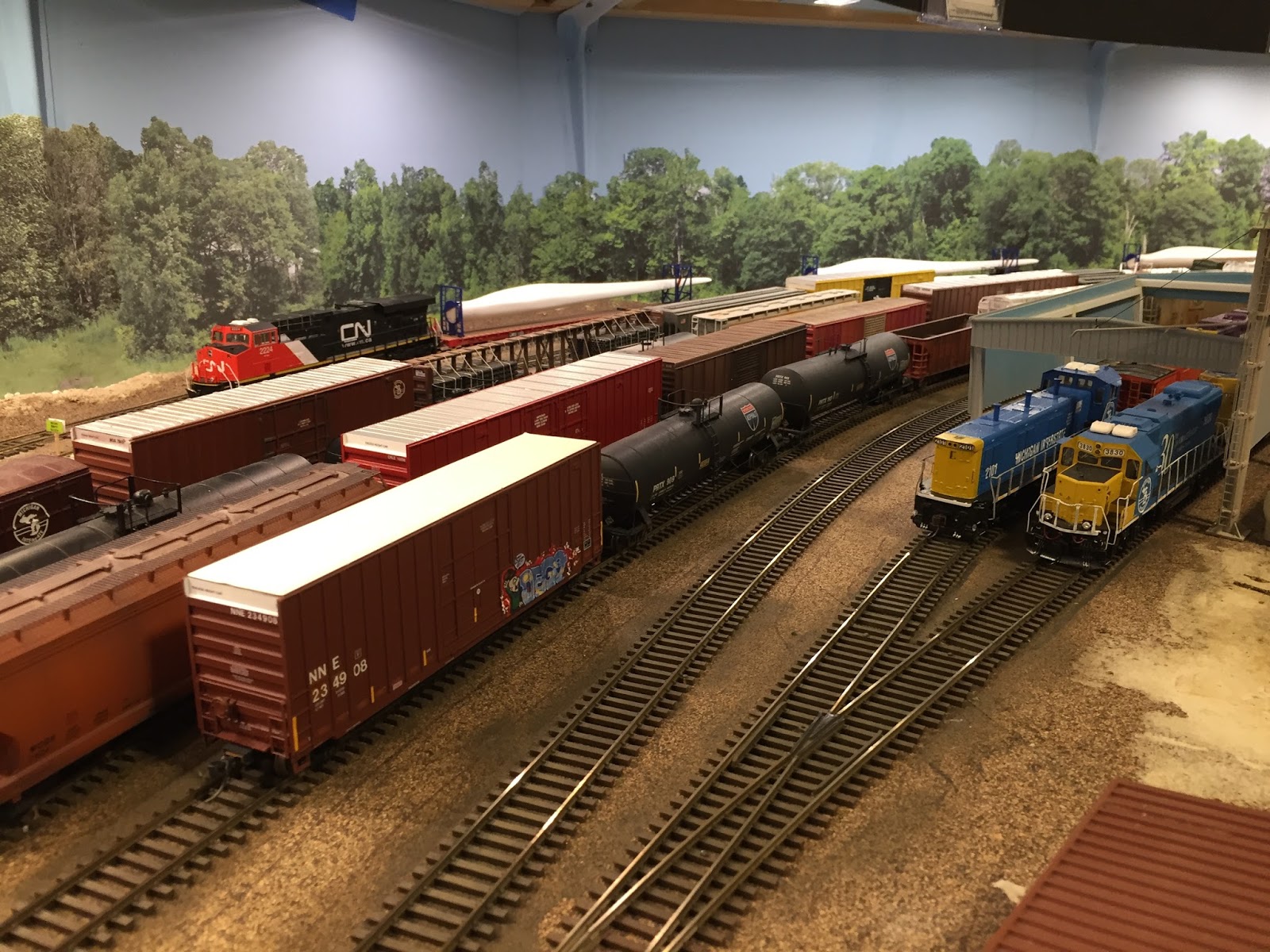
Bay Yard has looked lust like this since my November 2017 ops session ended.
So to catch everyone up, we are going to spend this post catching up on happenings around the MCIS St. Clair Sub for Nov, Dec, and Jan. We will get back on track in two weeks with my February Update post and hope to stay on task through the year.
NOVEMBER 2017
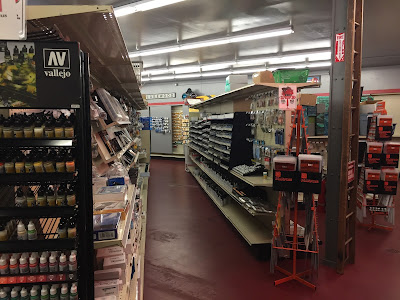
On the back end of October essentially in November the CFO and I travelled to Denver for a friends wedding. No trip to the Mile High City is complete without a stop by Caboose Hobbies at their new location in Westminster. In my opinion I actually like the new store better and they did not miss a beat on selection when reopening. If you are in Denver, take sometime to check out the shop.

Yours truly out front @ Caboose
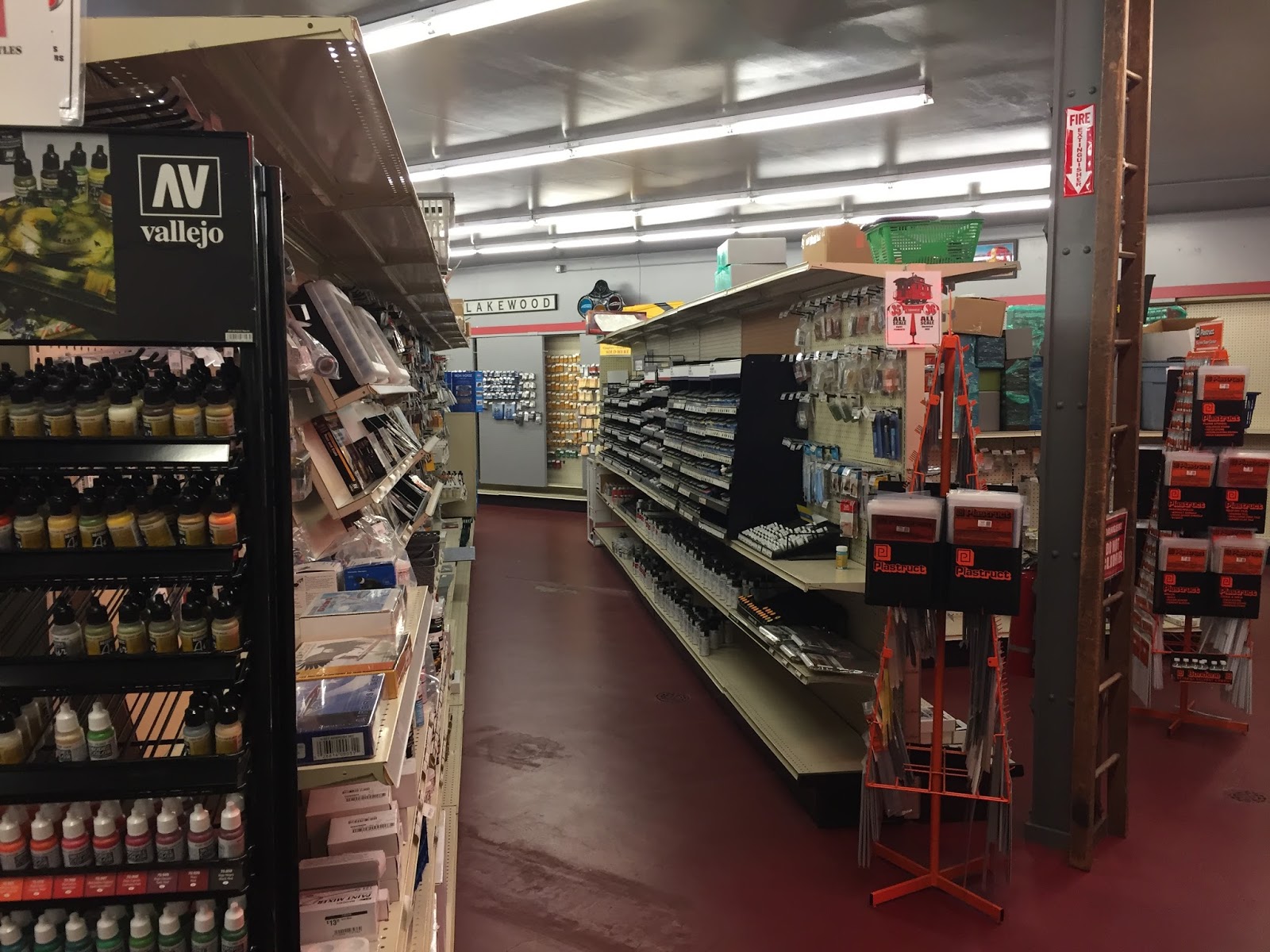
Amazing selection, great layout, I will return.
I picked up a Bowser 100 ton hopper in DRGW paint, this car will be re lettered and numbered to commemorate our friends getting married. Just a fun way to add story to the car.

Two BNSF Executive SD70mac's assigned on the Longmont Local.
Early November saw arrival of Scale Trains equipment that I had preordered some time ago.

Thrall 4427 cubic carbon black hopper (River Counter)

Trinity 31,000 gallon crude tank car (Operator)
I decided to pick up one of each to put through its paces on the operation. An ops session later and they operating superb on the "Clair", maybe there could be more Scaletrains equipment to come? One item I do like is the inexpensive decal package you can purchase to spruce up the crude tank car operator models, in my opinion it is just enough.
Mid November I hosted my only ops session for 2017..... dismal but glad I still got one in. My "Regular" crew filled the job board with solid 3.5 hour session moving twelve trains with around 160 car movements. Not bad for a 11x13 double deck layout. Here are photos from the session.

Operating or congregating.... you decide

M-BAPH-16 led by MCIS 4008 (GP40-2) and engineer M.T. taking the main at Gerhard, Michigan heading east.

M-MCBA-15 led by MCIS 6051 (GP60) rolls across the Saginaw River into Bay Yard Restricted Limits.

Yardmaster CMP assisting with DP link up.

M-PHBA-16 rounding the curve through Grays Lake, Michigan.

M-CNBA-15 knocking down the West Siding Switch signals at Upper Huron.
DECEMBER 2017
Shopping, Christmas activities, and family time were the priority this month. During this time I did not get a lot of work done on the layouts but made up for it with what Santa and the family got me for Christmas. I am beyond blessed to have family that support me and my hobby.

New Atlas equipment adding to the layout roster, just a sampling of new additions.
JANUARY 2018
A new year and time to refocus on the layout and blog.
Started out the year making some railcar fleet changes. Staying current day has its pros and cons such as acquiring and retiring equipment.
- 4600 Cu. covered hopper fleet (Retired)
These cars had come to MCIS through the years post Conrail either as new or second hand acquisition serving our agricultural customers moving various grains. As covered hoppers grew in cubic size and changed, so the usage of the 4600. No longer needed in agricultural service the cars were assigned to rock salt service. When the business changed so again did this fleet. Rock salt service is tough on railcars so now in the 2010s, older worn out cars were scrapped while the younger cars were rebuilt for 50 year service. Growing agricultural demands in unit train service stressed the active fleet of ag. hoppers prompting MCIS to place the 4600 into single carload service for agricultural customers. This service was only temporary as the Equipment team placed an order for forty brand new 5188 Cubic hoppers from Gunderson. These new cars are expected to be in service late Q1 2018 working alongside with 5161 cubic hoppers in unit and large block carload service. Adding a newer car to the fleet causes a cascading effect, in this case moving 4750 cubic cars to single service and displacing the last of the 4600s.

Block of four 4600 cubic cars on their way to DELC loaded with grains for chicken feed.
The cars have now found good homes on other freelanced model railroads living on as MCIS equipment in earlier eras.
- 3600 Cubic covered hopper fleet (Retired)
A similar story to the 4600s where these cars had been acquired for rock salt service. In the end these cars were rebuilt at 40 yes but still aged out based on the 50 year rule. The cars have been traded to a local friend who in an early 2000s era layout will use them in rock salt service.


The last two 3600 cubic hoppers awaiting pickup to begin journey to new owner.
Getting back to modeling skill roots, I found a Bowser 100 ton hopper kit for $5 and thought it would be a good project to sharpen my skills. After a little paint, decals, and weathering we have CWE 125690 which will be in coke service between Follansbee, WV. (Mountain State Carbon) and Upper Huron, MI. (Michigan Sugar).

Final product turned out pretty nice - trucks need to be slightly darker.
Wrapping up January's, I found myself back in Denver for daytrip. I had a few extra hours before my evening flight and took advantage of stopping by to see John Parkers BNSF Fall River Division. The layout is amazing and I could spend an entire post discussing it and maybe one day we will do a post covering an end to end tour of a train, but today I am just going to show some great photos of the visit. If you want to check out more of this layout John has a Facebook page (BNSF Fall River Div.) and website open for anyone to view: http://www.bnsfrr.net/

Boise Cascade lumber mill at Winston

The mainline heading west from Overlook passes over itself in a large loop as it descends into Kimber

BNSF Staging Yard (Represents Tacoma / Lincoln)

Highway crossing at East Horton adjacent to Kappa Grain

Hobos..

Yours truly at Fall River Yard

Fall River Switchers and the DPU of an empty PSC coal train. I love this yard scene.

Fall River Yard
Enjoy the photos and stayed tuned for February's Update which should be back on track.
GM
Wednesday, November 29, 2017

Wednesday, November 15, 2017

Monday, October 30, 2017
Modeling Glass Cullet Loads
I think at one point we all come across a prototype freight load that begs to be modeled. In particular I can say there are many that lack a model, but a simple one that has been on my planning board for sometime is recycled glass otherwise known as "cullet". My intended goal will be to share the backstory and creation process so you can bring these loads to your layout.

What is it?
In simple enough terms it is crushed recycled glass. This material is used in numerous ways such as fiberglass insulation, glass beads (sandblasting), and road materials to name a few.
 Potter's Industries north of Brownwood, TX. They make glass ball beads for many different uses.
Photo courtesy of Google Maps.
How is it transported?
Alot of times glass cullet is crushed and transported locally by truck from the recycling facility to end user, but there are cases where it moves by rail. I do not believe it will be one of those unit train type commodities found often like aggregate or coal, but as a one off load. Every prototype example I have seen or found shows use of dump trucks or open top hoppers, not to say an older covered hopper could be utilized. This is a heavier material as its raw material was sand and soda ash prior to becoming glass, so the car would not be loaded to the brim more around 3/4 full. The cars I have seen are marked EAMX (Everest Railcar Services). Due to the nature of the commodity these are probably in a captive service as cleaning would require something more abrasive then water like sandblasting.
Besides seeing in person from an overpass, John Danielson over at rrpicturearchives.net has the best photo of these 3 bay hoppers carrying glass cullet at this link: EAMX 328 - John Danielson Collection
How is is loaded/unloaded?
Loading at the crushing facility is as simple as a front end loader filling its bucket and dumping into the railcar. Unloading is just as easy. In this prototype example a small under track pit allows the transloader to empty from one gate at a time. The pit is shallow but deep enough for a front end loader to get a bucket full, back up, and then load the awaiting truck. The front end loader could also double as a car mover if multiple cars are to be unloaded.

 Photo courtesy Google Street View
How is it modeled?
The easiest part about glass cullet is its "replication" on a model level. Sometimes making model loads are complex and require kitbashing or even scratchbuilding. In this case it is about simple cosmetics. Follow along as I walk you through creating a glass cullet load. In as little as a weekend you could have yours complete.
Step 1: Materials
- Removable type open top hopper load (I used Motrak Models #81728)
** Side note the Motrak Models coal load is fantastic as purchased without changes **
- Rustoleum 2x (Gloss White) or any cheap white spray can
- Dullcote
- Extra fine glitter (I used silver peacock which is blueish-green-silver)
- India Ink / Isopropyl Alcohol mix
 Coal type loads work well with the sharp angles to provide a good texture for the paint / glitter to adhere on.
Step 2: Base
- Start by giving the drop in loads a generous coat of gloss white (Well ventilated area)
- Spray from all four angles to ensure you get a good coat in all the tight spots

Step 3: Glitter
- Giving the paint just about one minute to setup some then sprinkler your glitter
- Do not worry about being modest you want solid coverage
- At this point let the load completely dry, do not touch or dump off excess glitter

Step 4: Glitter to Cullet
- Once dry, carefully pickup the load and tip it over to remove excess material.
- You should have good coverage with no load under showing through.
- In a well ventialiated area - spray the load with dull coat and let dry.
- The glitter provides the dull shine that you would find from crushed glass.
 This was my test plastic load before making the cullet loads from Motrak load.
Step 5: Dull
- Once dullcoat is dry use your fingernail to check around the edges of the load and remove any glitter stuck on the sides. Its important the sides are clear of glitter so it will sit properly in the railcar.
- Airbrush load with a india ink / alcohol mix to get the desired dirty effect
- Let dry, then place in railcar.


This technique worked well for plastic and hydrocal casting loads. Materials can be purchased for under $10 at your local craft store.
I hope you enjoyed this fun post, showing you a quick and inexpensive way to add a one of a kind open top load to your layout. Everyone have a safe and happy Halloween.
GM

What is it?
In simple enough terms it is crushed recycled glass. This material is used in numerous ways such as fiberglass insulation, glass beads (sandblasting), and road materials to name a few.

Photo courtesy of Google Maps.
How is it transported?
Alot of times glass cullet is crushed and transported locally by truck from the recycling facility to end user, but there are cases where it moves by rail. I do not believe it will be one of those unit train type commodities found often like aggregate or coal, but as a one off load. Every prototype example I have seen or found shows use of dump trucks or open top hoppers, not to say an older covered hopper could be utilized. This is a heavier material as its raw material was sand and soda ash prior to becoming glass, so the car would not be loaded to the brim more around 3/4 full. The cars I have seen are marked EAMX (Everest Railcar Services). Due to the nature of the commodity these are probably in a captive service as cleaning would require something more abrasive then water like sandblasting.
Besides seeing in person from an overpass, John Danielson over at rrpicturearchives.net has the best photo of these 3 bay hoppers carrying glass cullet at this link: EAMX 328 - John Danielson Collection
How is is loaded/unloaded?
Loading at the crushing facility is as simple as a front end loader filling its bucket and dumping into the railcar. Unloading is just as easy. In this prototype example a small under track pit allows the transloader to empty from one gate at a time. The pit is shallow but deep enough for a front end loader to get a bucket full, back up, and then load the awaiting truck. The front end loader could also double as a car mover if multiple cars are to be unloaded.

Photo courtesy Google Maps (Satellite View)
Glass cullet rail to truck transload in Brownwood, TX on Texas Rock Crusher Railroad
How is it modeled?
The easiest part about glass cullet is its "replication" on a model level. Sometimes making model loads are complex and require kitbashing or even scratchbuilding. In this case it is about simple cosmetics. Follow along as I walk you through creating a glass cullet load. In as little as a weekend you could have yours complete.
Step 1: Materials
- Removable type open top hopper load (I used Motrak Models #81728)
** Side note the Motrak Models coal load is fantastic as purchased without changes **
- Rustoleum 2x (Gloss White) or any cheap white spray can
- Dullcote
- Extra fine glitter (I used silver peacock which is blueish-green-silver)
- India Ink / Isopropyl Alcohol mix

Step 2: Base
- Start by giving the drop in loads a generous coat of gloss white (Well ventilated area)
- Spray from all four angles to ensure you get a good coat in all the tight spots

Step 3: Glitter
- Giving the paint just about one minute to setup some then sprinkler your glitter
- Do not worry about being modest you want solid coverage
- At this point let the load completely dry, do not touch or dump off excess glitter

Step 4: Glitter to Cullet
- Once dry, carefully pickup the load and tip it over to remove excess material.
- You should have good coverage with no load under showing through.
- In a well ventialiated area - spray the load with dull coat and let dry.
- The glitter provides the dull shine that you would find from crushed glass.

Step 5: Dull
- Once dullcoat is dry use your fingernail to check around the edges of the load and remove any glitter stuck on the sides. Its important the sides are clear of glitter so it will sit properly in the railcar.
- Airbrush load with a india ink / alcohol mix to get the desired dirty effect
- Let dry, then place in railcar.


This technique worked well for plastic and hydrocal casting loads. Materials can be purchased for under $10 at your local craft store.
I hope you enjoyed this fun post, showing you a quick and inexpensive way to add a one of a kind open top load to your layout. Everyone have a safe and happy Halloween.
GM
Wednesday, October 18, 2017

Wednesday, October 11, 2017

Subscribe to:
Posts (Atom)